
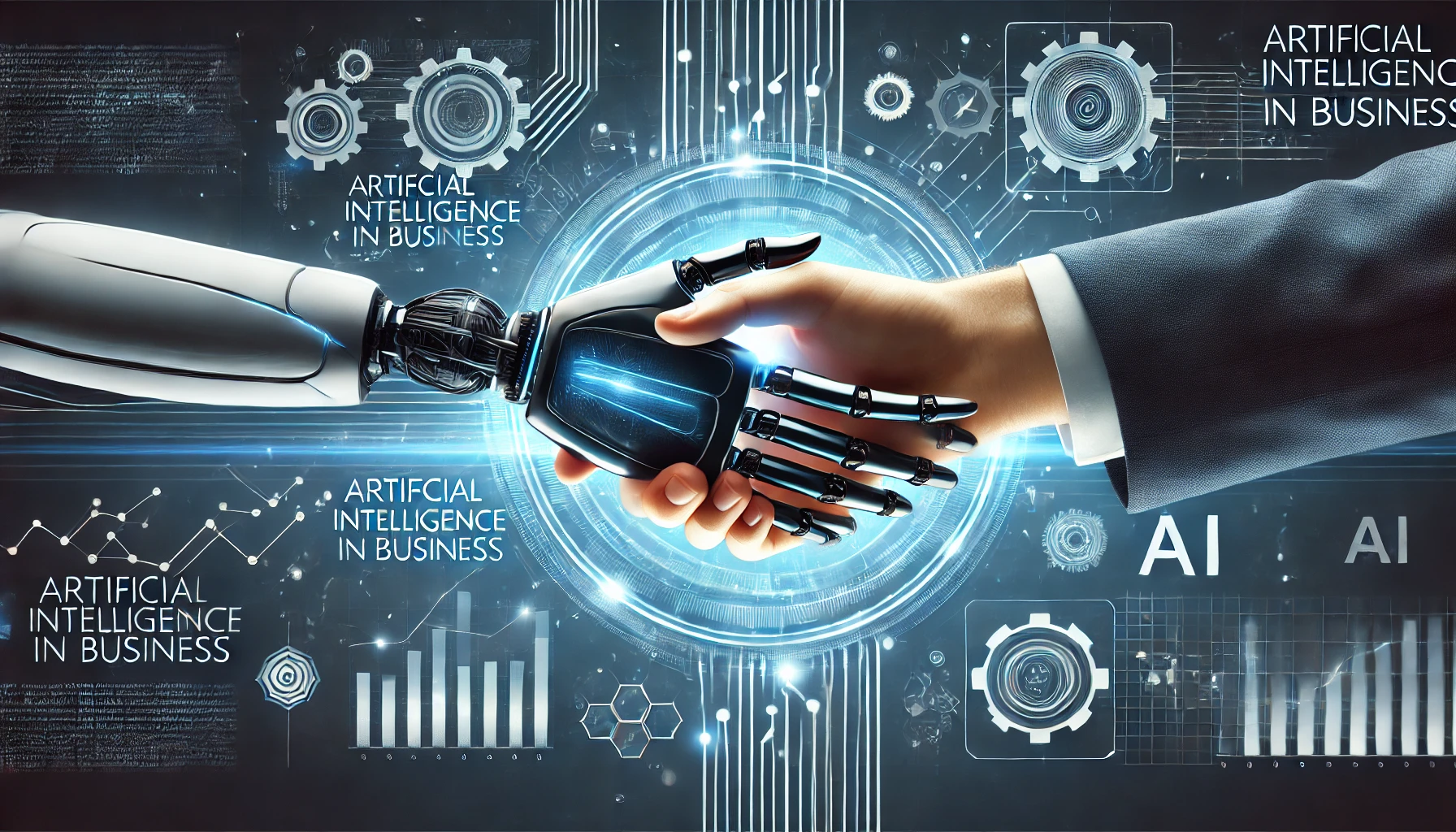

Artificial intelligence in business has become a significant factor that redefines corporate operations, customer experience, and decision-making processes. AI is transforming many aspects of the business world, including customer service and supply chain management, thus enabling organizations to improve efficiency, reduce costs, and foster innovation. This paper will discuss how AI is changing business practice, from automation to personalized experiences, and how organizations can harness its power for long-term success.
AI in Industrial Automation: Productivity and Cost Savings
One of the most dominant ways Artificial Intelligence impacts the business world is through automation. AI-based systems allow organizations to automate mundane jobs that otherwise require human intervention. This not only improves productivity but also reduces the cost of operation. For example, AI-based chatbots can handle customer-related queries and thus allow customer service representatives to focus on more complex tasks.
Similarly, AI systems can manage inventory, forecast demand, and optimize supply chains, improving efficiency across industries. In manufacturing, AI-driven robots can perform high-precision tasks once done manually, reducing the need for human labor and minimizing errors.
Data-Driven Insights for Better Decision Making
Data is a crucial component of the business decision-making process in the present digital world. Applying Artificial Intelligence in business enables organizations to scrutinize vast datasets quickly and accurately, extracting vital information to make strategic decisions. For instance, machine learning algorithms can analyze consumer behavior to allow companies to predict future purchase trends and adjust their marketing approach accordingly. Predictive analytics will leverage AI power to allow companies to mitigate risks and make smarter finance decisions about predicting trends, as the data analyzed through AI helps unlock opportunities and confront challenges to facilitate more informed decision-making.
Artificial intelligence in customer experience: Personalization and engagement
AI is revolutionizing how businesses relate to customers. Personalized experience is one of the key components in customer satisfaction, and Artificial Intelligence in Business plays a crucial role here. AI analyzes customer data and then provides customized recommendations to ensure that the products and services offered are according to individual preferences.
E-commerce websites like Amazon use the artificial intelligence approach to make related product recommendations based on previous purchases or browsing habits, increasing conversion rates. Virtual AI assistants and chatbots are designed to answer customer inquiries rapidly and resolve complaints, leading to better customer satisfaction.
AI in Human Resources: Talent Management Revolution
Human Resources is another area where Artificial Intelligence in Business is making waves. From recruitment to employee retention, AI is helping businesses optimize their HR processes. AI-driven tools can scan resumes, assess candidates' skills, and even conduct initial interviews, making the recruitment process faster and more efficient. Moreover, AI assists employee training and development by identifying skills gaps and recommending personalized learning paths. AI can also predict employee turnover based on various factors so companies can take proactive measures to improve employee engagement and retention.
AI in finance: optimization of operations and security.
Artificial Intelligence in Business is used in financial services to enhance security, streamline operations, and make better financial decisions. AI algorithms can identify fraudulent activities by analyzing transaction patterns in real-time, ensuring that intervention occurs quickly before significant damage is done. Furthermore, AI improves risk management by giving financial analysts accurate insights, allowing them to predict market trends and minimize losses.
Artificial intelligence-based automated trading systems enable faster and more accurate decision-making processes, thereby increasing profitability while reducing human error. Additionally, artificial intelligence transforms customer service through virtual assistants that assist customers in various tasks, such as account balance verification, transaction processing, and answering inquiries.
AI in marketing: Contextual campaigns and consumer analysis
AI is revolutionizing the way businesses approach marketing. By analyzing consumer behavior and preferences, Artificial Intelligence in Business can create highly targeted marketing campaigns that resonate with specific customer segments. AI algorithms can optimize advertising spend by identifying the best channels, timing, and content for reaching the desired audience. Moreover, artificial intelligence instruments can anticipate consumer actions, allowing enterprises to actively interact with clients at optimal times, thereby enhancing conversion rates. By conducting sentiment analysis on social media, AI can assess the public's perception of a brand, thus equipping businesses with critical insights necessary for refining their marketing strategies.
AI for Innovation: New Product Development and Problem-Solving
AI's ability to analyze data and recognize patterns has made it the most valued tool for business innovation. Organizations use Artificial Intelligence in Business to fast-track product development and enhance problem-solving. This can make it easier for businesses to develop product designs that will reflect the needs of the consumers.
In pharmaceutical industries, AI is used to discover new drugs by analyzing extensive datasets to determine new treatments at a rate beyond conventional methods. Similarly, AI is being applied across all research and development domains in such a manner that it allows organizations to address the complexities involved and provide novel solutions to the marketplace.
Issues and Ethics Concerns in Business for Implementing
AI With many advantages, Artificial Intelligence in Business comes with challenges and ethics. Many concerns exist with privacy as AI works on the consumption of enormous volumes of consumer data. So, businesses have to handle this data responsibly, being mindful of regulations such as GDPR. Moreover, AI-driven automation has implications for job displacement and future concerns over work. Companies must balance automation with creating new job opportunities and invest in reskilling their workforce. Ethical issues, such as bias in AI algorithms, must also be addressed to ensure fair and equitable outcomes.
Conclusion:
Adopting AI Innovation in the Business World In summary, Artificial Intelligence in Business changes how companies do business with clients and make decisions. The advantages include but are not limited to the automation of processes and data-driven decision-making for enhanced customer experience security improvements. On the other hand, businesses have a huge challenge to face: the ethical aspect of implementing AI. With AI integration, companies can innovate to deliver their products and operations within a dynamic market business environment. As artificial intelligence evolves, so will its role in business and, therefore, become more important to the corporation, thus demanding that organizations ensure they remain competitive.
Another Blog: Make Your Mental Health Your Priority